PLL Synchronization Instability in Weak Grids
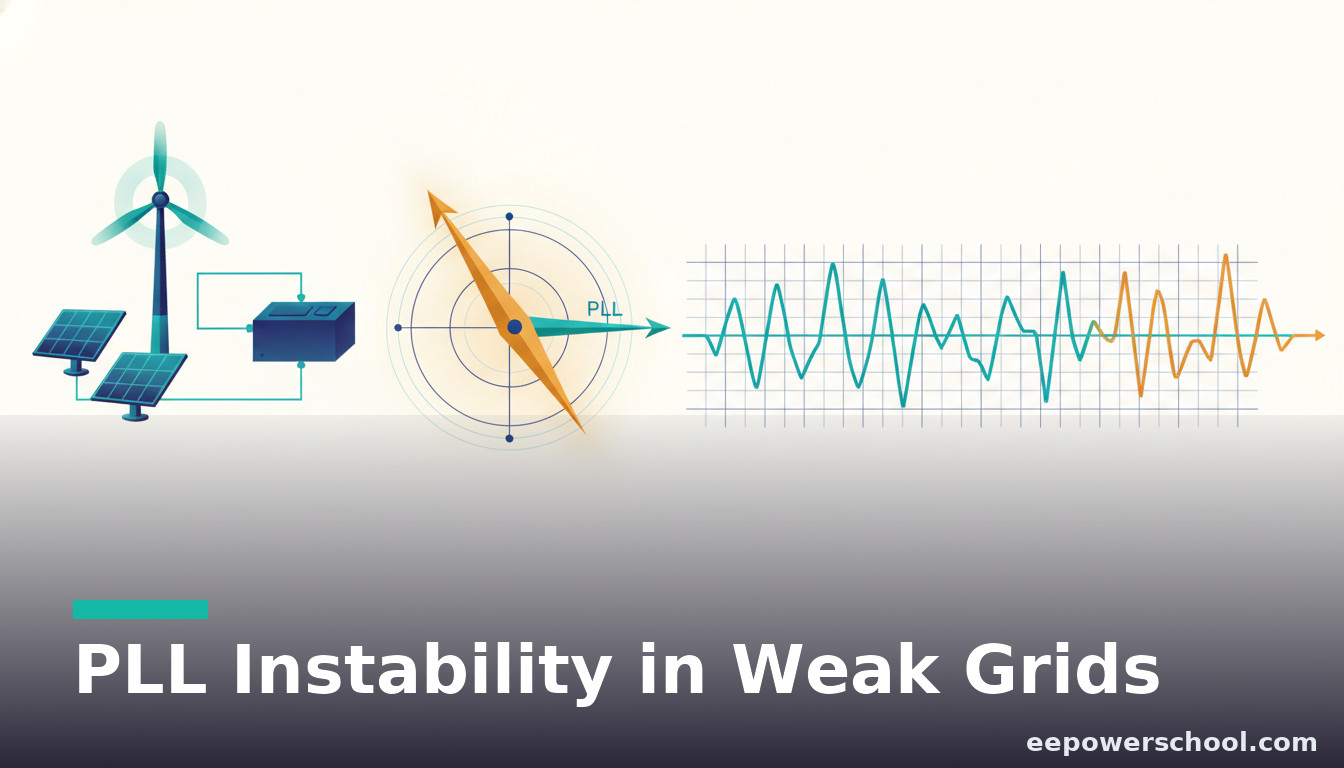
Almost every grid-following inverter on the planet relies on one small control loop to know where the grid is: the phase-locked loop, or PLL. It works flawlessly on a strong grid and is the quiet cause of a whole class of failures on a weak one. PLL instability is the reason a perfectly good inverter can oscillate, trip, or refuse to ride through a disturbance the moment it connects to a weak corner of the network.
This article explains what the PLL does, the hidden assumption it makes, why weak grids violate that assumption, and the feedback mechanism that turns a helpful control loop into an unstable one. We finish with the practical fixes, from retuning to grid-forming control.
What a Phase-Locked Loop Does
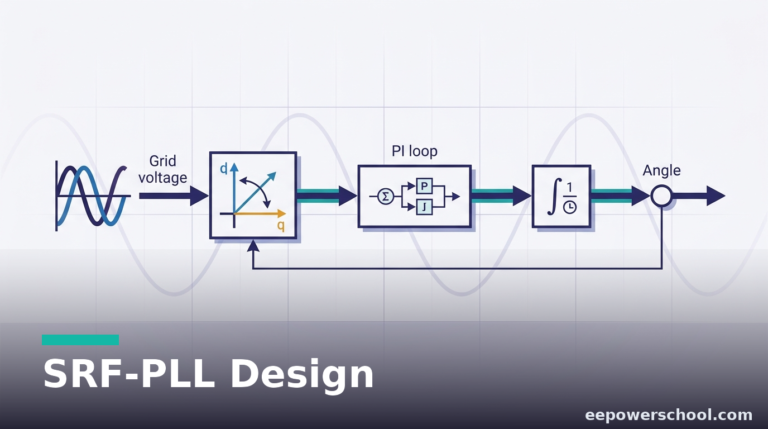
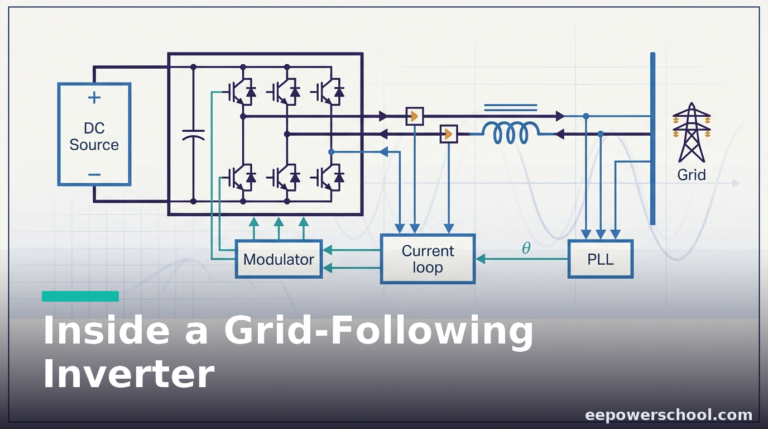
A grid-following inverter does not set the grid voltage; it follows it. To inject current at the right angle, it must continuously know the grid voltage’s phase angle and frequency. The phase-locked loop is the control that measures them: it compares its internal angle estimate with the measured grid voltage and adjusts until the two are locked together.
Once locked, the inverter knows “where” the grid is and can push active and reactive power precisely in step. The PLL is therefore the inverter’s compass. Everything the grid-following inverter does downstream depends on that compass pointing at a stable, trustworthy reference.
The Hidden Assumption: a Stiff Reference
The PLL carries an unstated assumption: that the voltage it is measuring is a stable reference the inverter itself cannot significantly disturb. On a strong grid that is true. The grid voltage is set by large nearby machines and a low source impedance, so the inverter’s own current barely moves it.
This is the assumption that makes grid-following control simple and robust, and it holds across the vast majority of historical connections. PLL instability is, at its heart, what happens when that assumption quietly stops being true.
Why Weak Grids Break the PLL
A weak grid has a high source impedance and a low short-circuit ratio (SCR). On such a grid, the inverter’s injected current produces a significant voltage drop across that impedance, which means the inverter’s own action moves the very voltage its PLL is trying to measure.
Now the compass is attached to the thing it is supposed to be pointing at. The PLL adjusts the inverter’s current based on the measured angle, but that current shifts the measured angle, which makes the PLL adjust again. The measurement and the actuation are no longer independent, and that coupling is the seed of PLL instability.
The Instability Mechanism
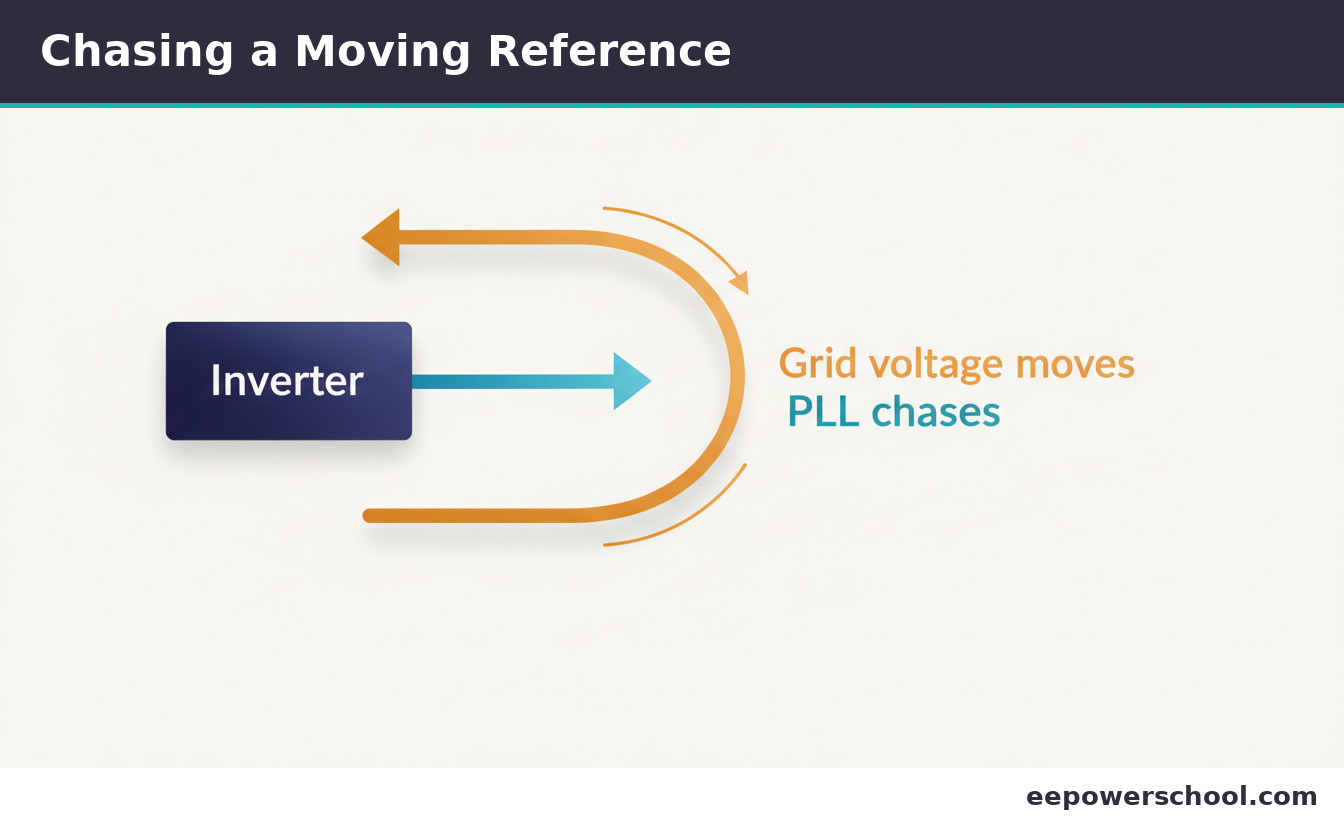
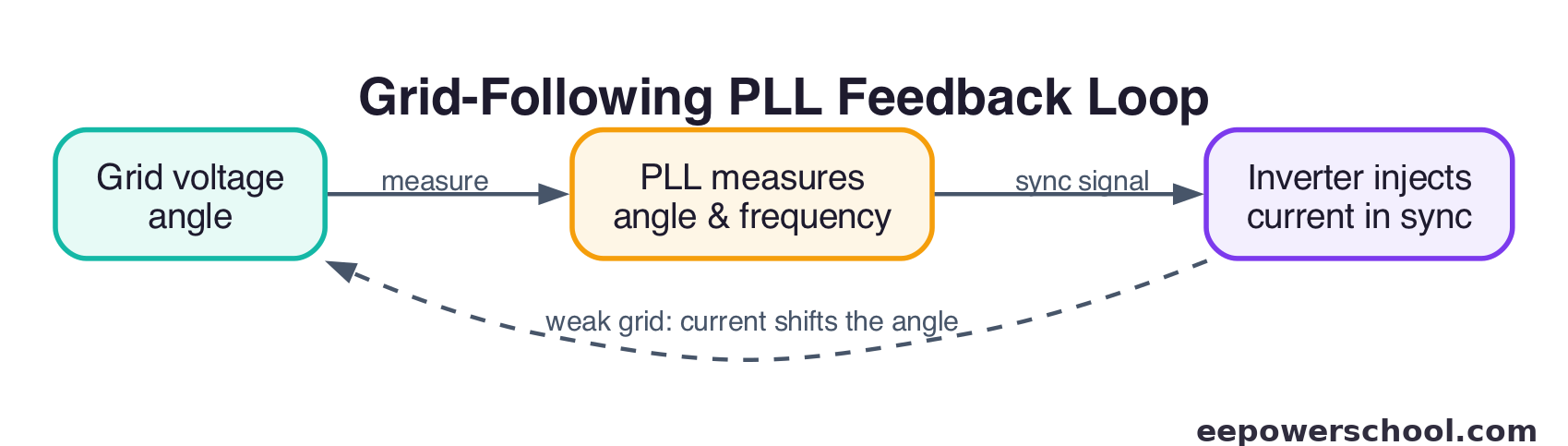
Put the loop together. The PLL measures the voltage angle, the inverter injects current to match it, and on a weak grid that current shifts the voltage angle further in the same direction. The loop reinforces its own error, classic positive feedback.
If the loop gain around that path exceeds unity at some frequency, small disturbances grow into sustained or growing oscillations instead of settling, typically in the range of a few hertz to a few tens of hertz. The inverter is no longer tracking the grid; it is chasing a reference that its own response keeps moving. The loop diagram below shows the path that closes on itself.
PLL Bandwidth: The Core Trade-off
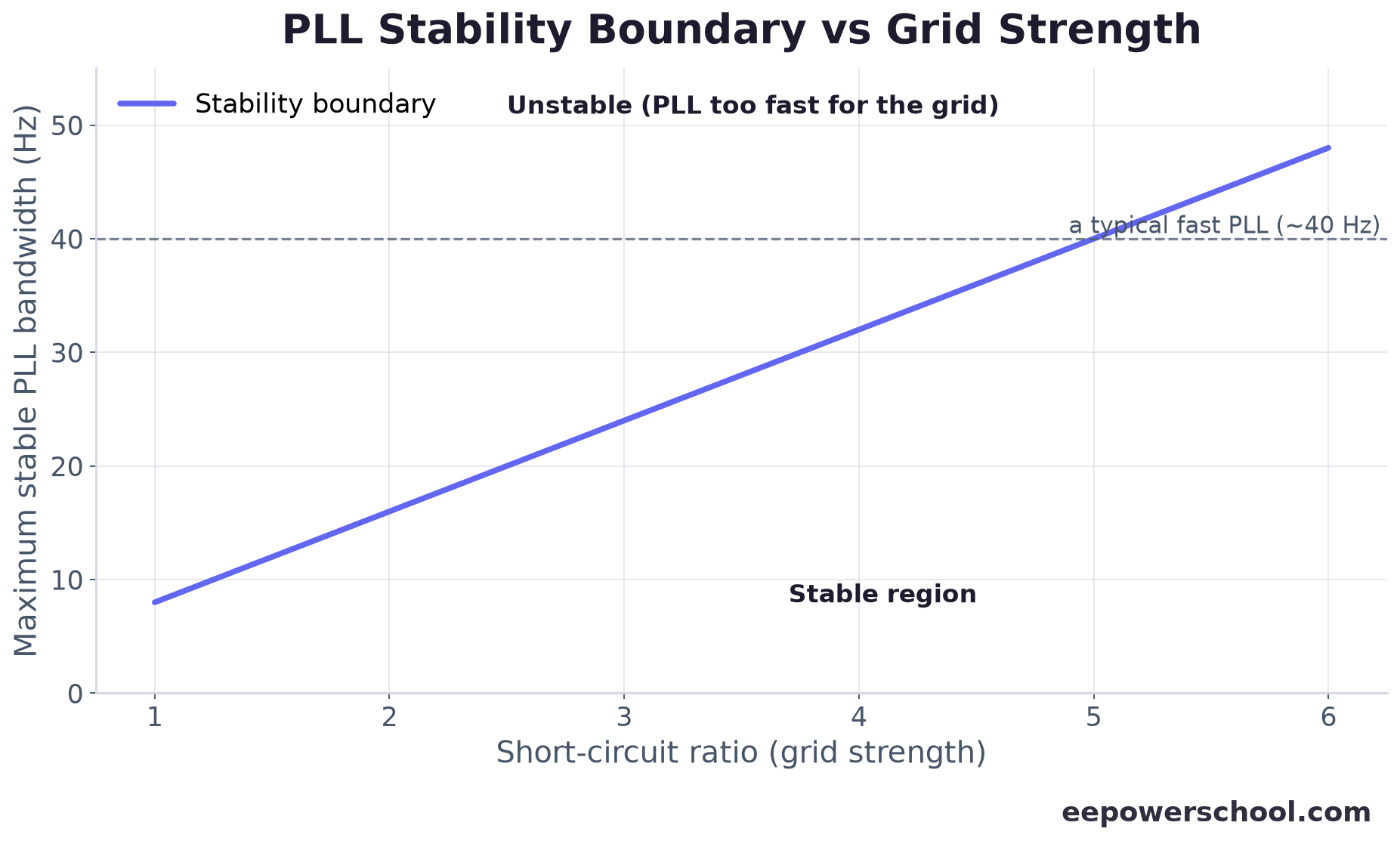
The single most important setting is the PLL’s bandwidth, how fast it tracks changes. A high-bandwidth PLL tracks quickly and rejects measurement noise well, which is exactly what you want on a strong grid. But the faster the PLL reacts, the more aggressively it participates in the feedback loop above, and the lower the grid strength at which it goes unstable.
So there is a direct trade-off: fast PLL plus weak grid equals instability. The chart shows the stability boundary, the maximum PLL bandwidth that stays stable rises with SCR, so a bandwidth that is perfectly safe on a strong grid can be unstable on a weak one. Tuning the PLL is therefore inseparable from the strength of the grid it connects to.
Symptoms and Real-World Impact
PLL instability shows up as poorly damped or growing oscillations in the inverter’s current and power, often visible across a cluster of plants sharing the same weak connection. It can cause protective trips, curtailment, and, when several inverters interact, wider disturbances.
This is not hypothetical. Grid operators and NERC have documented inverter-based resources behaving unexpectedly during disturbances in low-strength areas, with control interactions among the contributing factors. As more inverters connect to weaker parts of the network, the operating envelope where grid-following control stays stable keeps shrinking.
Fixes: Retuning, Adaptive PLLs, and Grid-Forming
There are three broad remedies, often combined:
- Retune the PLL: reduce its bandwidth so it participates less aggressively in the feedback loop. Simple and effective, at the cost of slower tracking.
- Adaptive or advanced PLLs: estimate grid strength and adjust the loop, or add compensation that cancels the destabilising coupling.
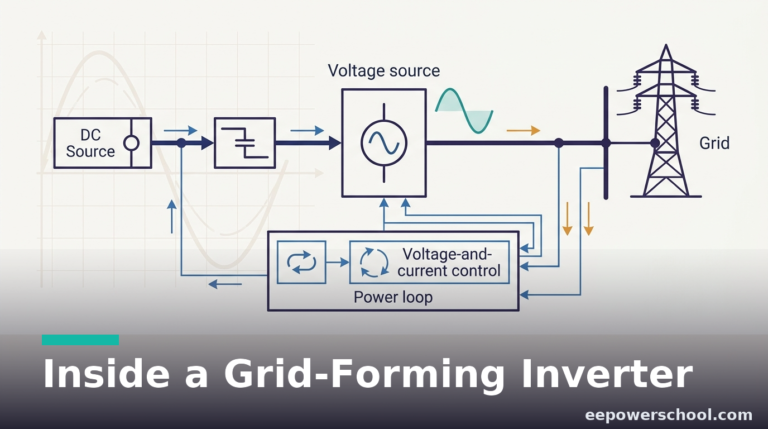
- Grid-forming control: the structural fix. A grid-forming inverter imposes a voltage reference instead of chasing one, so it does not depend on a PLL to follow the grid and remains stable where grid-following cannot.
The first two extend the reach of grid-following control; the third removes the root cause.
The Bigger Picture: Following vs Forming
PLL instability is the clearest illustration of why the industry is moving toward grid-forming inverters. The PLL is what makes a grid-following inverter dependent on a strong external reference, and that dependence is exactly what fails as grids weaken with rising inverter penetration.
Grid-forming control breaks the dependence by making the inverter a voltage source that helps establish the reference rather than chasing it. It is no coincidence that grid codes increasingly require grid-forming capability on weak-grid connections: it is the durable answer to the PLL instability that grid-following control cannot fully escape. The phenomenon also sits squarely in the converter-driven, slow-interaction category of the 2021 stability classification.
Frequently Asked Questions
What is a phase-locked loop (PLL) in an inverter?
It is the control loop a grid-following inverter uses to measure the grid voltage's phase angle and frequency, so it can inject current in step with the grid. The PLL is effectively the inverter's compass; everything it does depends on that angle estimate being accurate and stable.
Why does a PLL become unstable in a weak grid?
On a weak grid the inverter's own injected current produces a large voltage change, so it moves the very voltage its PLL is measuring. The measurement and the inverter's action become coupled, creating positive feedback that can turn small disturbances into growing oscillations.
How does PLL bandwidth affect stability?
A faster (higher-bandwidth) PLL tracks well and rejects noise but participates more aggressively in the destabilising feedback loop, so it goes unstable at higher grid strength. The maximum stable PLL bandwidth rises with the short-circuit ratio, so a setting safe on a strong grid can be unstable on a weak one.
How is PLL instability fixed?
By reducing the PLL bandwidth (retuning), using adaptive or advanced PLLs that compensate for grid strength, or switching to grid-forming control. Grid-forming is the structural fix because it imposes a voltage reference instead of chasing one, removing the PLL dependence entirely.
Do grid-forming inverters use a PLL?
Not in the same way. A grid-forming inverter behaves as a voltage source that establishes its own reference rather than following the grid, so it does not rely on a PLL to stay synchronised. This is why it remains stable in weak grids where grid-following PLLs fail.
Related reading
- Inverter-based resources: the future of renewable energy
- Inverter basics: classification and applications
- Grid inertia 101: frequency dynamics and the modern grid
- Electrical Engineering Formula Cheat Sheet (power systems quick reference)