What It Takes to Run a Grid on 100% Inverter-Based Resources
What it takes to run a grid on 100% inverter-based resources: inertia, fault current, system strength, a worked RoCoF example, and how operators got there.
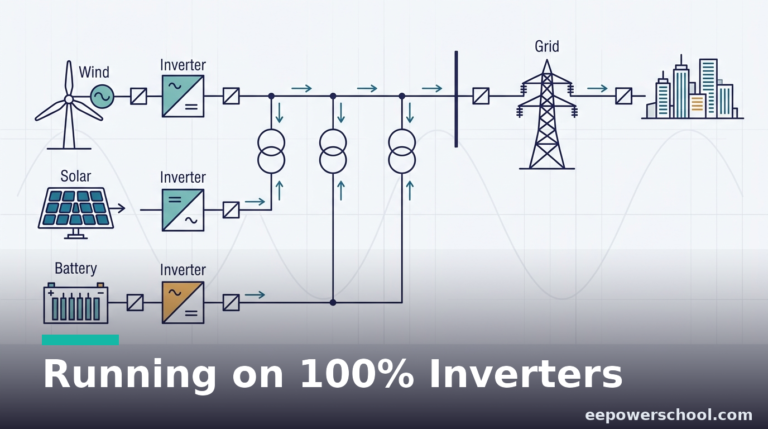
What it takes to run a grid on 100% inverter-based resources: inertia, fault current, system strength, a worked RoCoF example, and how operators got there.
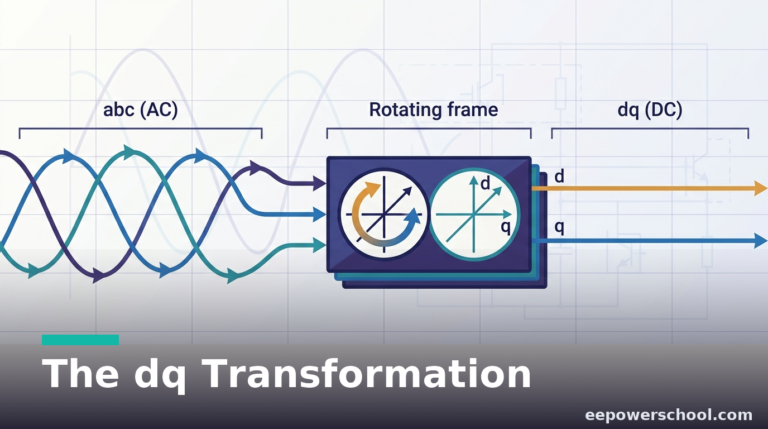
The dq transformation for inverter control: Clarke and Park, why AC becomes DC, active and reactive current, and a worked example with the matrices.
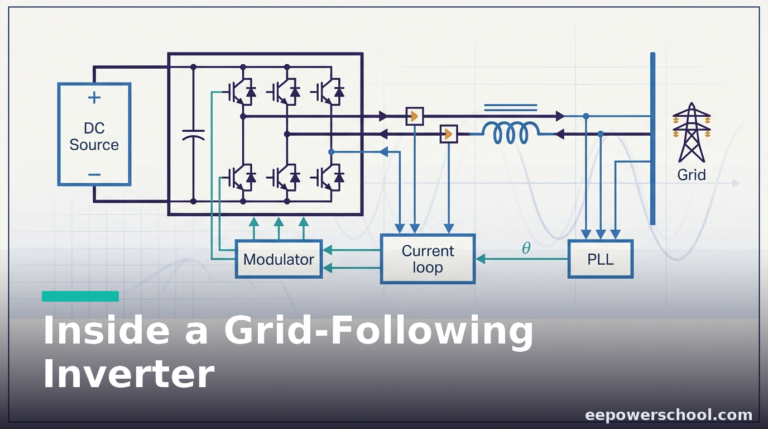
Grid-following inverter control: the cascaded PLL, current and outer loops, dq decoupling, IMC tuning, and why fault current is limited. With worked math.
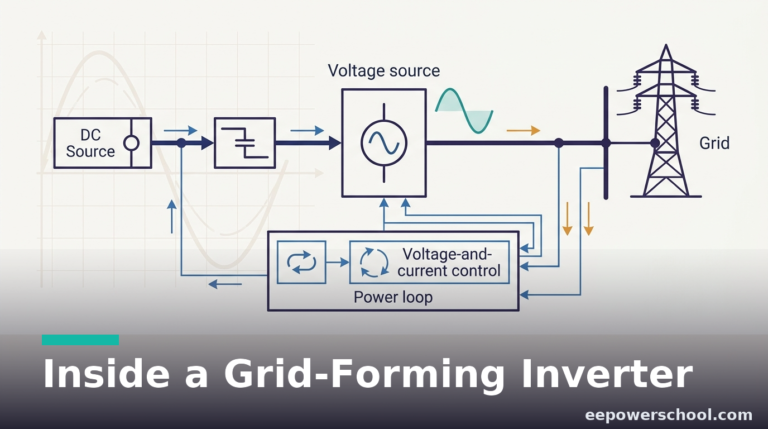
Grid-forming control: droop, virtual synchronous machine and power synchronization, the shared voltage/current cascade, with worked droop and inertia math.
Grid-forming inverter requirements explained: GC0137, AEMO, IEEE 2800.2 and UNIFI specs, the key tests, and a worked phase-jump current-limit example.